

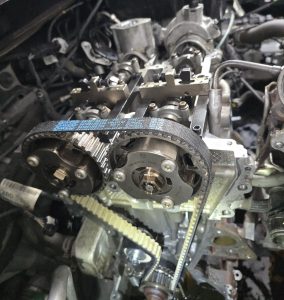
If you are reading this, you are likely one of thousands of drivers searching for terms like “Ford wet belt replacement cost” or “low oil pressure warning light”.
The “wet belt”—a timing belt that runs inside the engine oil—was designed to improve fuel efficiency and reduce emissions.1 However, for many owners of Ford and Peugeot/Citroen vehicles, it has become a costly headache.
This guide breaks down the specific issues affecting the Ford 1.0 EcoBoost, Ford Transit Custom, Ford Ranger, and the 1.2 PureTech engines, helping you decide whether to fix, sell, or replace.
HBM in Peterborough – Cambridgeshire, can fix and replace timing belts of all types. If you decide that replacing or fixing is the best option for you, simply fill in the HBM Garage form below and we will get back to you asap.
Book Your Wet Belt Fix or Replacement in Peterborough
Tell us your make and model, along with the desired date for your wet belt work using the form below or give us a call.
1. The Ford 1.0 EcoBoost: The “EcoBoom” Nightmare
Target Vehicles: Ford Fiesta, Focus, EcoSport, C-Max (2012–2020 approx).
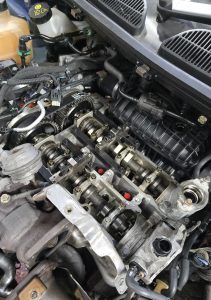
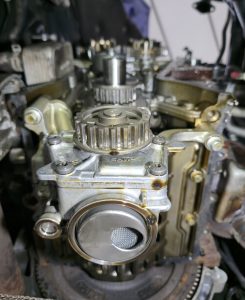
The 1.0L EcoBoost engine is one of the most common engines regarding wet belt failures. The rubber belt degrades over time, releasing debris that clogs the oil pickup strainer (the mesh filter in your oil sump).
-
The Problem: The belt teeth strip off, or the belt swells. The debris starves the engine of oil.
-
The Interval: Ford originally stated 10 years or 150,000 miles. Do not wait this long. Specialists now recommend changing it every 7–8 years or 80,000 miles.
-
Ford 1.0 EcoBoost Wet Belt Replacement Cost:
-
Independent Specialist (HBM Peterborough): £850 – £1,200
-
Main Dealer: £1,600 – £2,000+
-
Note: Always ask if the price includes the oil pump belt and cleaning the oil sump strainer.
-
2. The Commercial Crisis: Ford Transit Custom & Ranger (2.0 EcoBlue)
Target Vehicles: Ford Transit Custom, Ford Ranger (2016+).
While the EcoBoost gets the headlines, the Ford Transit Custom wet belt issue is arguably more severe because it affects businesses. This issue is specific to the 2.0L EcoBlue “Panther” engine.
-
Wet Belt or Chain? There is confusion here. The 2.0 EcoBlue uses a belt-in-oil for the timing (in many variations) and the oil pump.2
-
Ford Ranger Wet Belt: Yes, the newer 2.0 EcoBlue Rangers have wet belts. (Older 2.2L or 3.2L Duratorq engines generally used chains/dry belts).
-
The Symptoms: Commercial vehicles often see higher mileage. A snapped belt in a Transit often requires a complete engine replacement, costing upwards of £5,000.
-
Revised Interval: Ford reduced the recommended interval for many of these engines to 6 years or 100,000 miles.3
Pro Tip: If you are buying a used Transit Custom or Ranger 2.0 EcoBlue, demand proof of wet belt replacement if it is over 5 years old.
3. The Rival: 1.2 PureTech Wet Belt Issues
Target Vehicles: Peugeot 208/2008/3008, Citroen C3/C4, Vauxhall Corsa/Mokka (Stellantis group).4
This is the non-Ford equivalent of the wet belt crisis. The 1.2 PureTech wet belt is notorious for crumbling.
PureTech Wet Belt Replacement Cost: £660 – £760
-
Visual Check: Unlike the Fords, you can sometimes see the condition of the belt on a 1.2 PureTech by opening the oil filler cap and looking down. If the belt looks cracked or swollen (wider than the pulleys), it needs immediate changing.
-
Service Action: Stellantis has acknowledged issues, reducing the interval to 6 years or 62,000 miles (100,000km).
-
Warning Sign: A “Service” light accompanied by an “Engine Fault” message is often the first sign the oil pressure is fluctuating due to blockage.
4. Ford Wet Belt Snap Symptoms & Warning Signs
How do you know if your belt is failing before the engine seizes?
-
Low Oil Pressure Warning: This is the #1 symptom. It usually means the belt hasn’t snapped yet, but debris is blocking the oil flow. Stop driving immediately.
-
Rattling Noise (Cold Start): A “bag of nails” sound when you first start the car can indicate the belt tensioner is failing or the belt has stretched.
-
Brake Vacuum Failure: On some models (like the 1.2 PureTech), the vacuum pump is driven by the camshaft; a failing belt can cause the brake pedal to feel hard.
-
Check Engine Light: Often triggered by VVT (Variable Valve Timing) solenoids getting clogged with rubber belt mush.
5. Is There a Recall?
Customers often ask if there has been a manufacturer recalls for these wet belt issues.
-
The Short Answer: Generally, no. There is no blanket “safety recall” because manufacturers argue it is a maintenance issue, not a safety defect (though brake vacuum failure is pushing this definition).
-
The “Goodwill” Answer: Ford and Stellantis sometimes offer “goodwill contributions” toward a replacement engine if you have a full dealer service history. Without that history, you are likely on your own.
Summary Table: Replacement Costs & Intervals (Estimates)
| Engine | Rec. Interval (Real World) | Est. Indep. Cost | Est. Dealer Cost |
| Ford 1.0 EcoBoost | 7-8 Years / 80k Miles | £850 – £1,100 | £1,500+ |
| Ford 2.0 EcoBlue | 6 Years / 90k Miles | £1,000 – £1,400 | £1,800+ |
| 1.2 PureTech | 6 Years / 60k Miles | £750 – £1,000 | £1,200+ |
Conclusion
If you own a vehicle with a Ford EcoBoost, Ford Ranger 2.0, or 1.2 PureTech engine, the “manufacturer schedule” is optimistic. If your car is approaching 6-7 years old, book a wet belt check immediately. The cost of a replacement belt is high, but the cost of a replacement engine is devastating.
If you are experiencing any wet belt issues get in touch with HBM Garage in Peterborough, and we can book you in for an assessment